Understanding Water Hardness in the Centennial State
Water hardness refers to the concentration of dissolved polyvalent metallic cations, predominantly calcium (^{2+}$) and magnesium (^{2+}$), present in municipal and private water supplies. While harmless to human health, these minerals exert profound thermodynamic and mechanical consequences on residential plumbing infrastructure, most notably residential water heaters.
A widespread assumption is that all Colorado water originates as pristine, soft alpine snowmelt. While communities drawing directly from high-elevation surface reservoirs along the Continental Divide (such as portions of the Denver Water system) often enjoy relatively soft water (measuring below 4 grains per gallon or 70 mg/L), many of Colorado's largest and fastest-growing communities rely on groundwater aquifers or blended water supplies. In municipalities like Parker, Brighton, Castle Rock, and Grand Junction, deep bedrock wells and alluvial deposits yield water with hardness levels ranging from 12 to over 25 grains per gallon—classifying as 'very hard' according to the U.S. Geological Survey.
The Thermodynamics of Thermal Scale Precipitation
The solubility of calcium carbonate exhibits an inverse temperature relationship—a phenomenon known as retrograde solubility. Unlike sugar or salt, which dissolve more readily in hot water, calcium carbonate becomes significantly less soluble as water temperature increases. When raw water is heated against the bottom steel head of a gas water heater or the surface of an electric immersion element (where metal temperatures reach 250°F to 400°F), dissolved calcium immediately precipitates out of solution as a solid mineral crystal known as calcite.
This mineral scale settles to the bottom of the storage tank, accumulating into a dense, chalky sediment blanket several inches thick. The consequences of this scale formation include:
1. Dramatic Energy Efficiency Loss
Calcite has a thermal conductivity approximately thirty times lower than steel. As this insulating mineral layer coats the bottom of a gas water heater, heat from the burner flame cannot transfer cleanly to the water. A tank with just 3/8-inch of calcified sediment can require up to 25 to 30 percent more natural gas to achieve the same water temperature, inflating monthly utility bills.
2. Burner Overheating & Tank Base Fatigue
Because the water is insulated from the steel bottom head, heat cannot dissipate quickly into the water volume. The steel head overheats, repeatedly reaching extreme temperatures that degrade the glass porcelain lining. As the protective glass cracks under thermal cycling, pressurized water comes into direct contact with bare steel, initiating rapid corrosion that culminates in tank base rupture.
3. Popping and Kettling Noises
Small pockets of water trapped beneath the calcified mineral layer become superheated by the burner, violently boiling into high-pressure steam bubbles. As these steam bubbles force their way upward through the compacted sediment, they create loud popping, rumbling, or banging sounds—often described by homeowners as rocks tumbling inside the tank.
4. Rapid Electric Element Burnout
In electric water heaters, calcium scale physically encases upper and lower heating elements. The element cannot transfer its heat to the surrounding water, causing its internal resistance wire to overheat and burn out within months.
Sacrificial Anode Rod Dynamics in Mineral-Rich Water
Every residential steel water heater is equipped with a sacrificial anode rod made of magnesium or aluminum. Because magnesium is electrochemically more active than steel, galvanic corrosion consumes the anode rod first, sacrificing it to protect the tank's steel walls. In hard water with high electrical conductivity, anode rods deplete at an accelerated pace—often completely disintegrating in three to four years rather than the typical six to eight years. Once the anode rod is consumed, aggressive water chemistry begins attacking the tank itself.
Proven Maintenance Strategies for Colorado Homeowners
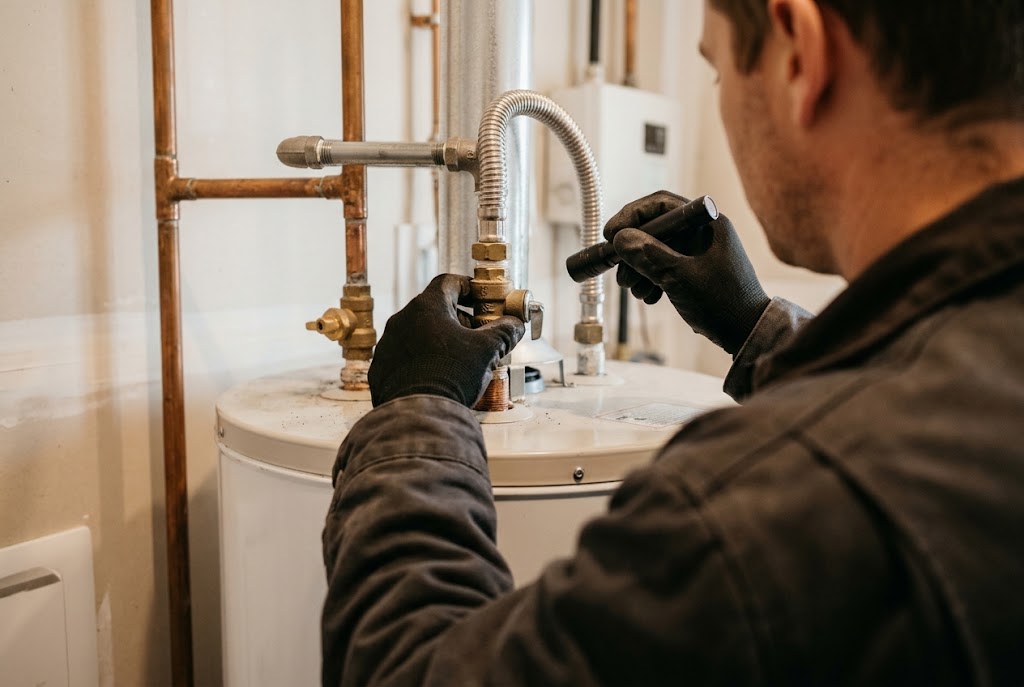
To preserve water heater efficiency and achieve the full 10 to 12-year lifespan of your water heater, implement these proactive measures:
- Annual Sediment Flushing: Connect a high-temperature garden hose to the bottom brass drain valve and flush sediment until discharge runs crystal clear. In severe hard water areas, an annual chemical descaling using food-grade citric acid dissolves hardened scale.
- Anode Rod Inspection Every 3 Years: Have a licensed plumber check the remaining diameter of your anode rod. If more than 50% of the core wire is exposed, install a new magnesium or powered titanium anode.
- Whole-House Water Softener Installation: An ion-exchange water softener replaces calcium and magnesium ions with sodium ions, completely eliminating mineral scale formation throughout your water heater, dishwashers, and fixture aerators.
- Proper High-Altitude Temperature Settings: Set your water heater thermostat to 120°F. Heating water to higher temperatures (135°F to 140°F) exponentially accelerates calcium precipitation.
Powered Titanium Anodes
Non-sacrificial electronic anodes eliminate rotten egg odor and provide permanent anti-corrosion protection in high-mineral water.
Citric Descaling Kits
Circulation pumps with food-grade citric acid dissolve rock-hard calcified calcite without damaging delicate copper heat exchangers.
Brass Ball Drain Valves
Upgrading cheap factory plastic drain valves to full-port brass valves enables high-velocity sediment purges without clogs.
Frequently Asked Questions About Hard Water & Water Heaters
Look for telltale signs such as white crusty mineral deposits on faucets and showerheads, spotty glassware after dishwashing, and dry skin after bathing. You can also review your municipal water provider's annual Consumer Confidence Report (CCR), which lists total hardness in mg/L or grains per gallon.
Yes, tankless water heaters are especially sensitive to hard water because their copper or stainless-steel heat exchangers feature very narrow passages. Mineral scale restricts water flow and creates hot spots that trigger error codes. Tankless units in hard water areas must be flushed annually with a vinegar solution or paired with a water softener.
No. Standard water softeners do not void water heater warranties. However, because softened water increases electrical conductivity slightly, anode rods are consumed faster. Regular anode rod inspections (every 2 to 3 years) are essential when operating a water softener.